
Catastrophic Personal Injury Lawyer in Florida
When an Injury Changes Everything, You Need a Different Level of Support
A Personal Injury Lawyer in Florida for Life-Changing Injuries
If you need a personal injury lawyer in Florida after an injury that has changed your life, Silva & Silva is a trial firm in Coral Gables that prepares every case for trial from day one. Its personal injury work concentrates on catastrophic, life-altering injuries: brain and spinal cord injuries, amputations, severe burns and other permanent harm that changes how a person lives, works and cares for a family.
The firm was founded by brothers Carlos E. Silva and Jorge E. Silva. In 1979, the Silva brothers lost their mother to medical negligence, and that loss shaped the firm they built. Silva & Silva represents injured people and their families across Florida, in English and Spanish, from its office at 236 Valencia Avenue in Coral Gables.
What does a catastrophic injury lawyer in Florida do?
A catastrophic injury lawyer in Florida investigates how a life-changing injury happened, identifies every person or company that may share responsibility, and documents what the injury will cost over a lifetime: medical care, lost earning capacity and the losses no bill captures. At Silva & Silva, that work draws on medical witnesses, life-care planners, economists and accident reconstruction, and every case is prepared for trial from day one. The consultation is free, and there are no fees unless we recover.
After a catastrophic injury,
everything can feel uncertain.
What makes an injury catastrophic?
An injury is generally called catastrophic when it leaves a permanent impairment: a lasting loss of movement, sensation, thinking or bodily function that changes how a person lives and works. Two things set these cases apart from most injury claims. The care can last a lifetime, and the injury often ends or reduces the person’s ability to earn a living. Both have to be measured and proved, often for decades to come.
Florida’s statutes define “catastrophic injury” for specific purposes. One example is in the medical malpractice chapter: Fla. Stat. § 766.118(1)(a) defines it, for the purposes of that section, as a permanent impairment constituted by:
- spinal cord injury involving severe paralysis of an arm, a leg or the trunk;
- amputation of an arm, a hand, a foot or a leg involving the effective loss of use of that appendage;
- severe brain or closed-head injury, as evidenced by severe sensory, motor or communication disturbances, severe complex integrated disturbances of cerebral function, severe episodic neurological disorders, or other conditions at least as severe;
- second-degree or third-degree burns of 25 percent or more of the total body surface, or third-degree burns of 5 percent or more to the face and hands;
- blindness, defined as a complete and total loss of vision; or
- loss of reproductive organs which results in an inability to procreate.
That definition belongs to one section of the malpractice statutes; it is not the test for every personal injury claim.
Brain injury and spinal cord injury cases
Traumatic brain injury
A brain injury case turns on showing how the injury changed the person: thinking, memory, communication, mood and the ability to work. That proof usually comes from the medical records and imaging, testing of cognitive function, and the people who knew the injured person before and after, such as family members and coworkers. Severe brain or closed-head injury is one of the conditions in the § 766.118 definition above. Our guide to traumatic brain injury claims in Florida explains the types of brain injury and how their costs are proven.
Spinal cord injury
A spinal cord injury can bring paralysis and medical needs that last for life. The National Spinal Cord Injury Statistical Center’s 2026 data sheet, “Traumatic Spinal Cord Injury Facts and Figures at a Glance,” reports that since 2015 about 29% of people with a traumatic spinal cord injury are re-hospitalized at least once in any given year after the injury, and that 18% are employed one year after it. That is why these cases center on future care and lost earning capacity. Our page on spinal cord injury cases and their lifetime costs covers those costs in detail.
What does an amputation injury attorney in Miami do?
An amputation injury attorney in Miami investigates how the limb was lost, identifies who is responsible, and documents what the loss will cost for the rest of the client’s life. Silva & Silva handles amputation cases from its Coral Gables office for clients across Florida. These injuries often follow a vehicle crash, a workplace or construction incident, a dangerous property condition or a defective machine or product, and each source of liability carries its own rules.
A person who loses a limb may need prostheses that are fitted, repaired and replaced over the years, revision surgery on the residual limb, physical and occupational therapy, and changes to a home or vehicle. Lost earning capacity is often a central issue when the injury ends the work a person did before.
Who is responsible depends on how the injury happened: a driver or trucking company after a crash, a property owner after an unsafe condition, a manufacturer or seller when a machine or product was defective. At work, an employer’s workers’ compensation liability is generally exclusive, with limited exceptions (Fla. Stat. § 440.11(1)), but an injured worker may accept those benefits and at the same time sue a negligent third party, such as a contractor or an equipment maker (Fla. Stat. § 440.39(1)). The damages may include medical expenses, lost income and earning capacity, and noneconomic losses such as pain and suffering and mental anguish.
What does a severe burn injury lawyer in Florida do?
A severe burn injury lawyer in Florida finds the cause of the fire, explosion, electrical contact or chemical exposure, identifies who is responsible, and documents the long-term cost of the burns, including future surgery, scarring and lost earning capacity. Silva & Silva represents people with severe burn injuries across Florida. Burn cases often arise from vehicle crashes, workplace and construction incidents, unsafe property conditions and defective products, and the cause usually must be investigated before the evidence is lost.
Treatment for severe burns can include skin grafting, repeated reconstructive surgery, therapy to keep scar tissue from limiting movement, and long rehabilitation. Scarring and disfigurement are part of the harm. In a motor vehicle case covered by Florida’s no-fault law, damages for pain, suffering, mental anguish and inconvenience are recoverable only when the injury meets the threshold in Fla. Stat. § 627.737(2), and one of the listed injuries is “significant and permanent scarring or disfigurement.”
Liability follows the cause: a manufacturer may answer for a product that ignited or exploded, a property owner or contractor for a fire or electrical hazard, and a driver or carrier for a crash.
How are future medical costs and lost earning capacity proven?
Future medical costs are usually proven with a life-care plan: a written projection of the care, equipment, therapy, medication and in-home help an injured person will need for life, with the cost of each item, built on the treating doctors’ recommendations. Lost earning capacity is proven by comparing what the person could have earned with what he or she can earn after the injury, often through vocational and economic testimony.
A life-care plan turns a diagnosis into a budget; an economist can then total it with the lost earnings. Florida’s comparative fault statute describes economic damages as including “past lost income and future lost income reduced to present value” and “medical and funeral expenses” (Fla. Stat. § 768.81(1)(b)).
For spinal cord injury, the National Spinal Cord Injury Statistical Center’s 2026 data sheet estimates the lifetime costs directly attributable to the injury, for a person injured at age 25, at $2,144,693 for a motor-functional injury at any level (AIS D) and $6,419,617 for high tetraplegia (C1–C4, AIS A, B or C), discounted at 2%. Those estimates leave out indirect costs such as lost wages, fringe benefits and productivity, which averaged $97,787 per year in 2025 dollars.
Defendants often challenge each assumption in a life-care plan and each year in an earnings projection, one reason Silva & Silva prepares these cases for trial from the start.
How are catastrophic injury cases proved in Florida?
Most of these cases rest on negligence: the injured person must show that the defendant owed a duty of reasonable care, failed to meet it, and caused the injury and the losses claimed. In Florida, the proof must also account for three rules changed by the 2023 tort-reform law, HB 837 (chapter 2023-15, Laws of Florida): comparative fault, the evidence allowed for medical expenses, and the deadline to sue.
Comparative fault
In a negligence action, “any party found to be greater than 50 percent at fault for his or her own harm may not recover any damages” (§ 768.81(6)). A person 50 percent or less at fault can still recover, reduced in proportion to his or her own fault (§ 768.81(2)). The rule applies to actions filed after March 24, 2023 (ch. 2023-15, s. 30), and it does not apply to actions for personal injury or wrongful death arising out of medical negligence under chapter 766. Read more about how Florida’s modified comparative fault rule affects an injury claim.
Medical bills
Under Fla. Stat. § 768.0427, evidence of past medical expenses that have been paid “is limited to evidence of the amount actually paid, regardless of the source of payment.” For unpaid and future care, the evidence “shall include, but is not limited to” amounts tied to the person’s health coverage or, without coverage or with Medicare or Medicaid, 120 percent of the Medicare reimbursement rate (170 percent of the applicable state Medicaid rate where there is no Medicare rate). Recoverable medical damages may not exceed either the evidence admitted or the sum of amounts actually paid, amounts still owed and amounts needed for reasonable and necessary future care (§ 768.0427(4)). The statute also applies to actions filed after March 24, 2023.
Deadlines
An action founded on negligence must be commenced within two years (Fla. Stat. § 95.11(5)(a)) if the cause of action accrued after March 24, 2023 (ch. 2023-15, s. 28); causes of action that accrued on or before that date keep the four-year period that applied before the law. Wrongful death actions have two years (§ 95.11(5)(e)). Medical malpractice has two years from the incident, or from when it was discovered or should have been discovered with due diligence, and in most cases no more than four years from the incident (§ 95.11(5)(c)). An action for injury founded on the design, manufacture, distribution or sale of personal property that is not permanently incorporated in an improvement to real property (a defective product, for example) is on the four-year list (§ 95.11(3)(d)), with a discovery rule and a statute of repose in Fla. Stat. § 95.031(2)(b). A claim against the state or one of its agencies or subdivisions, including counties and cities, must first be presented in writing, generally within three years after it accrues (Fla. Stat. § 768.28(6)(a)). Which deadline controls depends on the facts, so check it early.
What should you look for in a local firm for complex personal injury cases near Coral Gables?
Look for a firm that prepares cases for trial, has handled injuries like yours against the kinds of defendants involved, and will tell you who works on your case and how fees and costs are handled. Silva & Silva is based at 236 Valencia Avenue in Coral Gables. With seven attorneys and a deep litigation support team, the firm prepares every case for trial from day one, and it handles catastrophic injury cases across Florida in these practice areas:
- Commercial trucking accidents
- Car accidents
- Construction accidents
- Workplace accidents
- Premises liability
- Negligent security
- Product liability
- Maritime negligence and boating accidents
- Cruise ship injuries
- Aviation accidents
- Railroad accidents
- Medical malpractice
- Wrongful death claims
To talk about what happened, request a free consultation or call 305-445-0011. There are no fees unless we recover.
Speak With Someone Who Understands
If you or a loved one has suffered a serious, life-changing injury, it’s important to understand your rights as soon as possible. We’re here to listen, answer your questions, and help you take the next step. Contact Silva & Silva today for a free consultation.
Frequently asked questions
What is a catastrophic injury lawyer?
A catastrophic injury lawyer is a personal injury lawyer whose cases involve injuries that permanently change a person’s life, such as brain and spinal cord injuries, amputations and severe burns. The claims are the same kinds of claims as in other injury cases, but the work is larger: proving a lifetime of medical needs and lost earning capacity, usually with life-care planners and economists, and preparing the case for trial.
How long do I have to file a personal injury claim in Florida?
For most negligence claims that accrued after March 24, 2023, the deadline is two years (Fla. Stat. § 95.11(5)(a)); claims that accrued on or before that date remain subject to the earlier four-year period. Medical malpractice (§ 95.11(5)(c)), wrongful death (§ 95.11(5)(e)), injuries caused by products (§ 95.11(3)(d)) and claims against government agencies (§ 768.28(6)) follow their own rules. The right deadline depends on the facts, so have it checked early.
What is Florida’s 50 percent rule?
It is Florida’s modified comparative fault rule in Fla. Stat. § 768.81(6): in a negligence action, a party found greater than 50 percent at fault for his or her own harm may not recover any damages. At 50 percent or less, the person can still recover, reduced by his or her share of fault. The rule applies to actions filed after March 24, 2023, and not to medical negligence actions under chapter 766.
What is a life-care plan?
A life-care plan is a written projection of the medical care, equipment, therapy, medication and in-home help an injured person is expected to need for life, with the cost of each item. A life-care planner usually prepares it from the medical records and the treating doctors’ recommendations. In a Florida case it supports the claim for future medical expenses, which Fla. Stat. § 768.0427(4)(c) limits to amounts necessary for reasonable and necessary future treatment.
Does Silva & Silva handle personal injury cases outside Miami?
Yes. Silva & Silva has one office, at 236 Valencia Avenue in Coral Gables, and represents injured people and families across Florida. Where a suit is filed depends on the case, not on our office: Florida’s general venue statute, Fla. Stat. § 47.011, points to the county where the defendant resides, where the cause of action accrued or where the property in litigation is located, and it does not apply to actions against nonresidents. The consultation is free, and there are no fees unless we recover.
Why should I choose Silva & Silva?
- Over $1.2 billion recovered for clients
- Serving families since 1992
- Extensive experience with complex, high-value cases
- A client-first approach focused on long-term outcomes
We understand that these cases are not just about compensation—they’re about rebuilding what’s been disrupted.
Silva & Silva
Complex Cases. Courtroom Results.
From aviation disasters to structural collapses, our trial lawyers take on complex catastrophic injury and wrongful death cases that demand aggressive litigation and withstand scrutiny.









OUR MISSION
Case Results for Catastrophic Injury
& Wrongful Death Claims
Justice is not measured by numbers alone—but outcomes matter when accountability is denied. Our firm has secured landmark results for victims of negligence and mass harm, including:
For the Victims of the Champlain Towers
For the Victims of a Terrorist Attack
For a Victim of Medical Malpractice
For the Victims of a Wrongful Death Boating Accident
For a Victim of Negligent Security
For Victims of the FIU Bridge Collapse
Trial Lawyers for Serious Cases
Our Law Firm
Silva & Silva is not a volume-settlement firm. We focus on complex litigation involving catastrophic injuries and wrongful death.
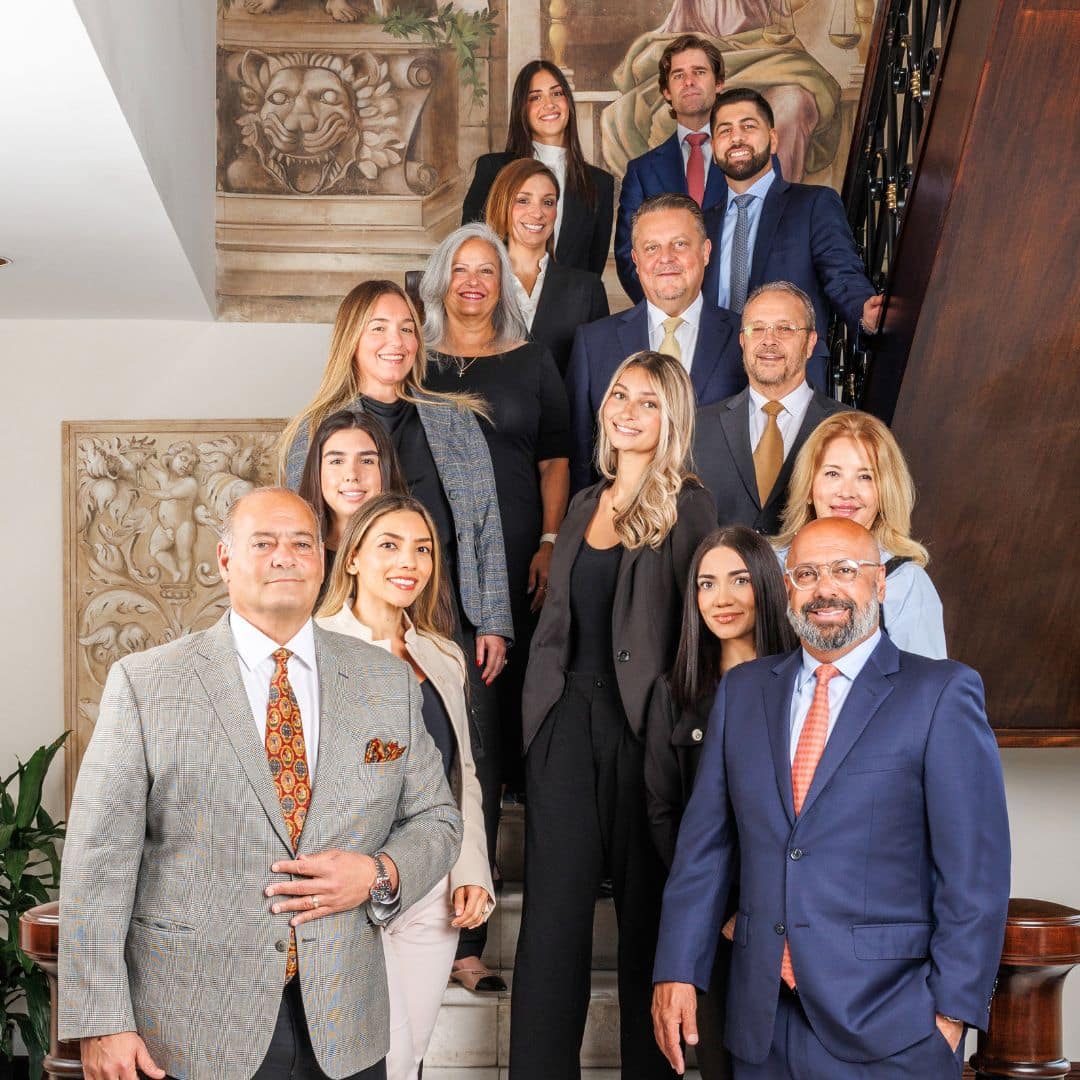
With seven attorneys and a deep litigation support team, our firm prepares every case for trial from day one.
Founding partners Jorge E. Silva and Carlos Silva have built a reputation for handling high-stakes matters across Florida. Our attorneys collaborate closely on major cases to deliver strategic, aggressive representation.
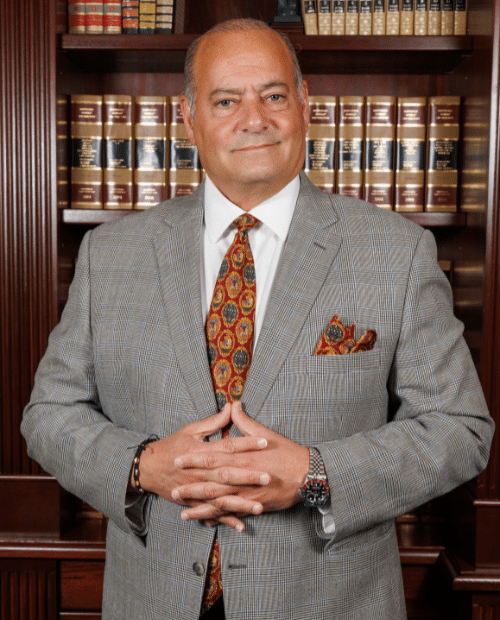
Carlos Silva
Carlos E. Silva gives a voice to victims and families who have suffered traumatic injuries and tragic deaths as a result of tortious conduct.
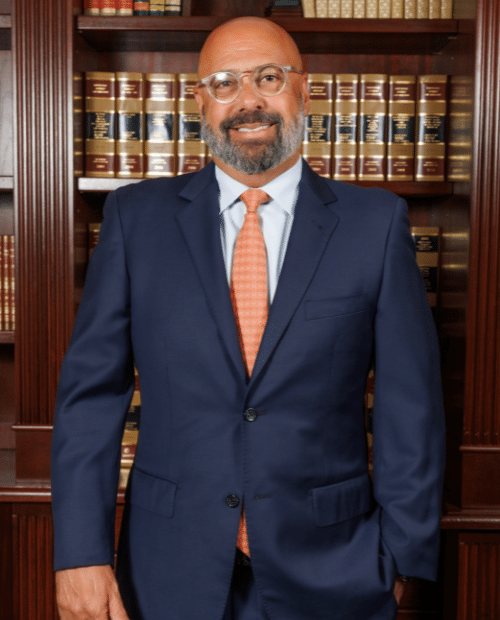
Jorge Silva
Jorge E. Silva is passionate about protecting victims and families who have suffered catastrophic medical malpractice events.

Testimonials
What Our Clients Say
Clients often say the difference is in how they’re treated. They’re not just another case; they’re people going through something serious. With honest guidance, consistent communication, and a results-driven approach, Silva & Silva has earned the trust of clients who needed someone in their corner.
